Together with patients during treatment and beyond

Victoria now has its first statewide platform to monitor and rapidly improve care, experience and outcomes for childhood cancer patients treated in Victoria - the Victorian Childhood Cancer Outcomes Registry (VCCOR).
The development of effective treatments for many childhood cancers has led to a dramatic increase in survival rates during the past 40 years. Despite this, many childhood cancer survivors will have one or more significant health problems related to their cancer or its treatment, negatively impacting their quality of life. Lifelong side-effects can include developmental disorders, vision and hearing problems, infertility, mental health challenges, and even additional cancers.
Until now, Victoria lacked a single statewide registry bringing together detailed diagnosis, treatment, and outcomes information about children and young people treated for cancer. Data remained fragmented across hospitals that provide treatment and care for childhood cancer patients, cancer registries, and the Long Term Follow-Up Program (LTFP), which monitors late effects of cancer and cancer treatment, and provides survivorship care until age 18. This fragmentation made it challenging to see the complete picture of a childhood cancer patient’s journey, or answer fundamental questions: Which treatments work best in the real world? Who is falling through the cracks? Where do patients and survivors need more support?
Connecting the dots
Initiated with a Medical Research Futures Fund grant in 2021 and now continuing with a Children's Cancer CoLab grant of $690,606, VCCOR is securely bringing together this information on children and young people aged 0 to 25 years treated for cancer in Victoria, regardless of where they live.
Led by the Victorian Paediatric Integrated Cancer Service (PICS), VCCOR brings together data from PICS partner health services, including The Royal Children's Hospital, Monash Children's Hospital and Peter MacCallum Cancer Centre, as well as the Victorian Cancer Registry.
VCCOR already has over 5,000 patients in the registry, which combines details about each patient's cancer, treatments and follow-up care from hospital systems and survivorship clinics on a secure platform. This enables highly detailed analysis across the entire patient journey, from diagnosis and treatment through to long-term health, quality of life, and late effects surveillance.
PICS is well-positioned to manage VCCOR as it already provides survivorship care and management of late effects through its multidisciplinary LTFP, supporting survivors until age 18 and facilitating the transition to appropriate adult-focused healthcare providers.
Director of PICS, Justine Carder, said, “VCCOR will bring information together to build a complete picture of the impact of childhood cancer and cancer treatment from data that the clinical teams are collecting routinely. VCCOR allows us to harness that in a structured, statewide and secure way so we can see patterns, ask better questions, and design better services and treatments for every child.”
Strong governance underpins the registry. Access is limited, and use is controlled under strict ethics and hospital protocols, ensuring information is used responsibly.
New opportunities for research and improved care
By enabling easy extraction and appropriate governance of rich datasets on Victorian childhood cancer cohorts, including years of historical data, the registry will unlock new research opportunities and drive improvements across existing services and care.
VCCOR will help refine evidence-based care pathways, support proactive monitoring of late effects, guide the design and delivery of cancer care and survivorship services, and inform policy. The registry's standardised architecture and scalable design also position it for national expansion, potentially transforming childhood cancer care across Australia.
Children's Cancer CoLab CEO, Dr Udani Reets, said CoLab’s investment in VCCOR was an investment in better long-term care and outcomes for childhood cancer patients.
“In the long run, our goal is simple: we want every child and young person with cancer in Victoria to receive safer, more coordinated and more equitable care, no matter where they live, and long after treatment ends.”
View more information about this CoLab-funded project here.
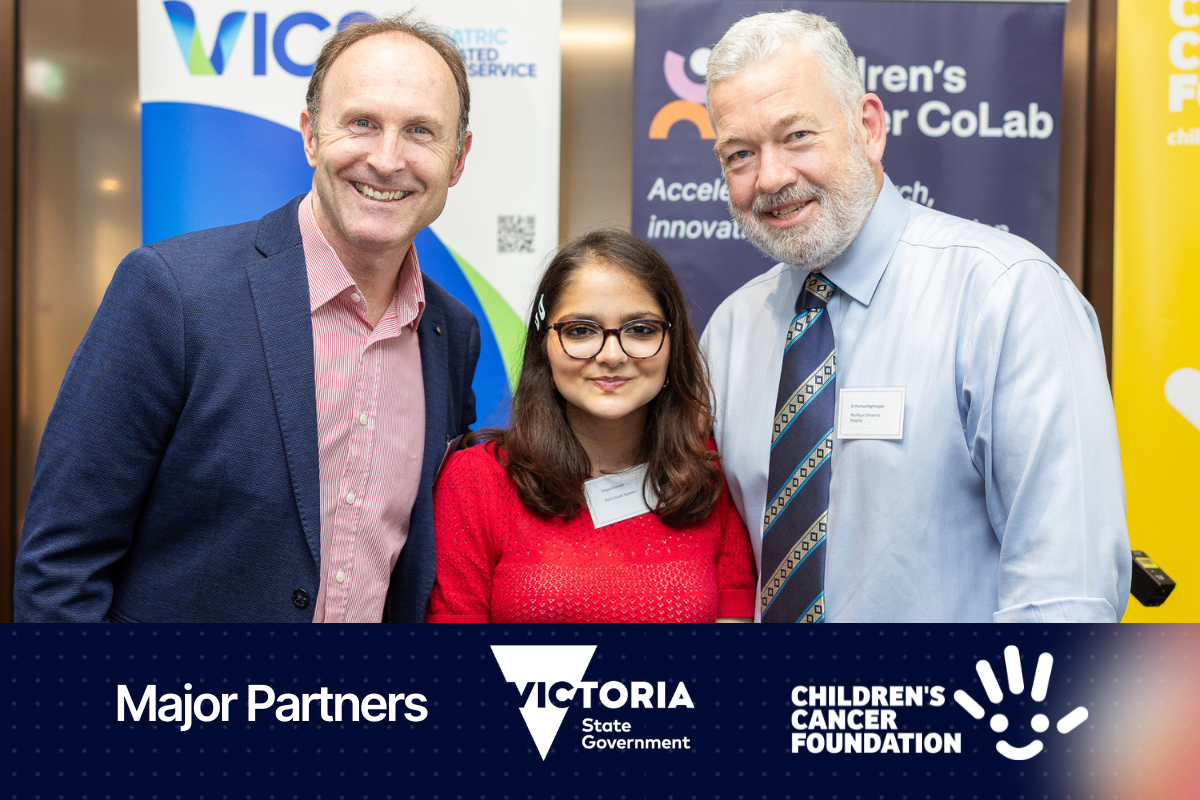
VCCOR launch event, 26 February 2026
Share our stories
All stories published by Children’s Cancer CoLab can be shared under a Creative Commons Attribution-NonCommercial 4.0 International license, which means you're welcome to share and adapt our content with proper attribution using the details below.



Sign up to our newsletter
Stay connected with Children’s Cancer CoLab.
Your support can make a difference
By supporting Children's Cancer CoLab, you become part of a community breaking traditional barriers to accelerate research discoveries, creating real impact for young cancer patients and their families.


